Thursday, January 9, 2014

Bonnie Olson's Docent Life @ Museum of Flight

This article first appeared in the March-April 2013 Aloft Magazine  of the Seattle Museum of Flight.
Bonnie Olson’s careers have come full circle. In 1984 she left one, teaching, and began a second, Human Resources in the aerospace industry. Following her 2008 retirement she returned to teaching, after a fashion, when she joined the MOF volunteer team “educating” visitors about the MOF collections.  
Now, as a Saturday AM docent, she is enjoying her new teaching time “…with the best group of docents at the Museum.”
“When I was new to the Saturday group everyone went out of their way to provide me with tips and make me feel welcome. Now we arrive at 9:00 and laugh and talk until 9:30 when they try to calm us down and put us to work,” she reports with a laugh.
Bonnie has been near the aerospace industry for nearly 30 years. Her HR work, in California and Washington, was with industry subcontractors for commercial and space programs. Along the way she married Nick Olson, a 35 year veteran of Douglas & McDonnell Douglas.
Upon retirement she began her volunteer work at the MOF. While waiting for a docent class she posed, in costume, as a Women Airforce Service Pilot (WASP) in the Personal Courage Wing. To prepare for the “role” she immersed herself in “WASP” research so she could properly explain the WASP role in World War II aviation.
Completing docent training she joined the Saturday AM team. Her favorite assignment is the main gallery. It offers a rich variety of aircraft with displays that appeal to a full range of guest interests from the Wright Flyer to the MD71 Blackbird.
In addition to her Saturday work she has assisted with galas and lent a hand in the HR and Membership departments. She is a member of the Docent Leadership Council and is currently working with docent Fred Quarnstrom developing a program for the visually impaired.
Like most docents she enjoys interacting with MOF guests and is often amazed at all she can learn from the many well informed visitors. She recalls one 12 year old who was an “expert” on the B-29 and quite upset that the MOF plane was “cocooned” and unavailable for tour. When told there was simply no indoor space for display he offered his own, simple solution: Hang it in the Main Gallery.
Bonnie has contributed 1100 volunteer hours to the MOF to date and has no interest in slowing down.
“I love what I do here,” she says with enthusiasm.


Tuesday, November 22, 2011

When Green Was a Color, Not a Life Style


I didn't write this; I wish I had. But anyone who remembers the Mickey Mouse Club and Leave it to Beaver should appreciated it.

Checking out at the store, the young cashier suggested to the older woman that she should bring her own grocery bags because plastic bags weren't good for the environment.

The woman apologized and explained, "We didn't have this 'Green' thing back in my earlier days."

The clerk responded, "That's our problem today. Your generation did not care enough to save our environment for future generations."

She was right -- our generation didn't have the "Green" thing in its day.

Back then, we returned milk bottles, soda bottles and beer bottles to the store. The store sent them back to the plant to be washed and sterilized and refilled, so it could use the same bottles over and over. So they really were recycled. But we didn't have the green thing back in our day.

We walked up stairs, because we didn't have an escalator in every store and office building. We walked to the grocery store and didn't climb into a 300-horsepower machine every time we had to go two blocks. But she was right. We didn't have the green thing in our day.

Back then, we washed the baby's diapers because we didn't have the throw-away kind. We dried clothes on a line, not in an energy gobbling machine burning lots of watts -- wind and solar power really did dry our clothes back in our early days. Kids got hand-me-down clothes from their brothers or sisters, not always brand-new clothing. But that young lady is right; we didn't have the green thing back in our day.

Back then, we had one TV, or radio, in the house -- not a TV in every room. And the TV had a small screen the size of a handkerchief (remember them?), not a screen the size of the state of Montana . In the kitchen, we blended and stirred by hand because we didn't have electric machines to do everything for us. When we packaged a fragile item to send in the mail, we used wadded up old newspapers to cushion it, not Styrofoam or plastic bubble wrap. Back then, we didn't fire up an engine and burn gasoline just to cut the lawn. We used a push mower that ran on human power. We exercised by working so we didn't need to go to a health club to run on treadmills that operate on electricity. But she's right; we didn't have the green thing back then.

We drank from a fountain when we were thirsty instead of using a cup or a plastic bottle every time we had a drink of water. We refilled writing pens with ink instead of buying a new pen, and we replaced the razor blades in a razor instead of throwing away the whole razor just because the blade got dull. But we didn't have the green thing back then.

Back then, people took the streetcar or a bus and kids rode their bikes to school or walked instead of turning their moms into a 24-hour taxi service. We had one electrical outlet in a room, not an entire bank of sockets to power a dozen appliances. And we didn't need a computerized gadget to receive a signal beamed from satellites 2,000 miles out in space in order to find the nearest pizza joint.

But isn't it sad the current generation laments how wasteful we old folks were just because we didn't have the green thing back then?

Please forward this on to another selfish old person who needs a lesson in conservation from a smartass young person.

Remember: Don't make old People mad. We don't like being old in the first place, so it doesn't take much to piss us off.

Tuesday, May 10, 2011

Helo to Fixed Wing; Platt Has Flown Them All.

The following profile appeared in the May/June Aloft, a publication of the Seattle Museum of Flight.

Having flown a range of aircraft, from helicopters to B-52’s, Docent Jim Platt brings a unique viewpoint the MOF. He can draw on his 28 years of USAF flying and ten years at Boeing to enhance the MOF visitor experience.


With an ROTC commission Jim completed pilot training in 1966 and, based in Florida, began flying CH3C helicopters in support of the Manned Space Program and the Eastern Test Range. It was an exciting time to be a part of the space program. Sadly he recalls being an on call pilot the day of the tragic Apollo One fire that took the lives of astronauts Grissom, White and Chaffee.

He then went from putting men in space to plucking them out of jungles. Moving to a base Thailand in 1967 he flew 98 missions as a Rescue Crew Commander in a HH3E “Jolly Green” rescue helicopter. His flying took him into Laos on occasions where, for the record, they never went. Nine downed airmen owe their survival to Jim’s aircrew.

Responding to a shortage of qualified pilots the Air Force retrained Jim and placed him in the cockpit of a C-141 transport and, eventually, in a B-52 with SAC. His flying career earned him, among other recognitions, a Silver Star and Distinguished Flying Cross, each with an Oak Leaf Cluster.

After a career mixed with flying and staff positions in places like Hq 8th Air Force, Hq SAC Jim retired and moved to Boeing. After ten years working in flight certification he retired again and then, to get out from under his wife’s feet, joined the Docent crew in 2009 as a Thursday regular. He particularly enjoys working the Personal Courage Wing. He loves it when visitors challenge his knowledge with questions. “It shows they are interested,” he says.

He also enjoys working with other docents who have incredible life stories. One was a P-38 pilot in World War II while another fought in the Battle of the Bulge.

He was honored to join an MOF panel of Vietnam era veterans to discuss their experiences during the war. He feels it is important to recognize the sacrifice so many made at that time.

Three of his four kids caught the flying/service bug. One is a Lt. Commander in the Coast Guard Reserve, married to an F-16 pilot. A second is a USAF Major and Predator Operator, married to a British Tornado pilot. Jim’s son is with the FAA.

Jim’s own words say a lot about his passion for aviation. “I got to live my dream. I have nothing but fond memories.”

Diana Heaton, Docent on the Go, Museum of Flight Seattle

The following profile appeared in the Jan/Feb issue of Aloft, the magazine of the Seattle Museum of Flight.

Diana Heaton, a retired IBM’er, likes to be active. She’s been a ski patroller, autocross racer and is still a competition water skier. And she loves to be around vintage aircraft. That is what drew Diana and her husband Dick to the MOF docent program nearly six years and 1200 volunteer hours ago. Diana is at the MOF each Sunday working the stations and leading tours. Her favorite assignment is the Personal Courage wing. As she puts it, “there is just something about those planes!”


In addition to her Sunday hours she has worked on women’s exhibits and enjoyed researching and writing some of the biographies for the “Chasing Horizons: Women in Aerospace” exhibits.

While Diana enjoys sharing her aviation knowledge with others she values the MOF as a personal learning resource for herself. Thirsting to expand her own knowledge base she takes advantage of every opportunity to learn from other volunteers and to attend MOF educational programs.

She and Dick take their interest in aviation with them when they travel. They have made several trips to the Reno Air Races and have thrilled to see and hear the P-51 fighters flash by. To have seen the planes in the air makes standing by the MOF’s new P-51 in the Personal Courage Wing very special.

They have also traveled across England on an aviation history tour, visiting sites that were important to British aviation heritage. A highlight of the trip was a visit to the Duxford Air Show at the Duxford “Aerodrome,” a field that dates back to World War I and is a part of the Imperial War Museum family of sites. “Duxford” is to the British what the Smithsonian Air and Space Museum is to Americans. For Diana one of the most inspiring moments at the show was a fly over of ten throaty Spitfire aircraft, loved by all “Brits” for their role in the air Battle of Britain.

The MOF is fortunate to have committed women, like Diana, in the docent corp helping to enrich the visitor experience, one visitor at a time.

Friday, January 14, 2011

Comet Restoration Moves Forward; Hood Leads the Way

The following article by Stephen Dennis appeared in the November/December 2010 edition of Aloft, a publication of Seattle's Museum of Flight.

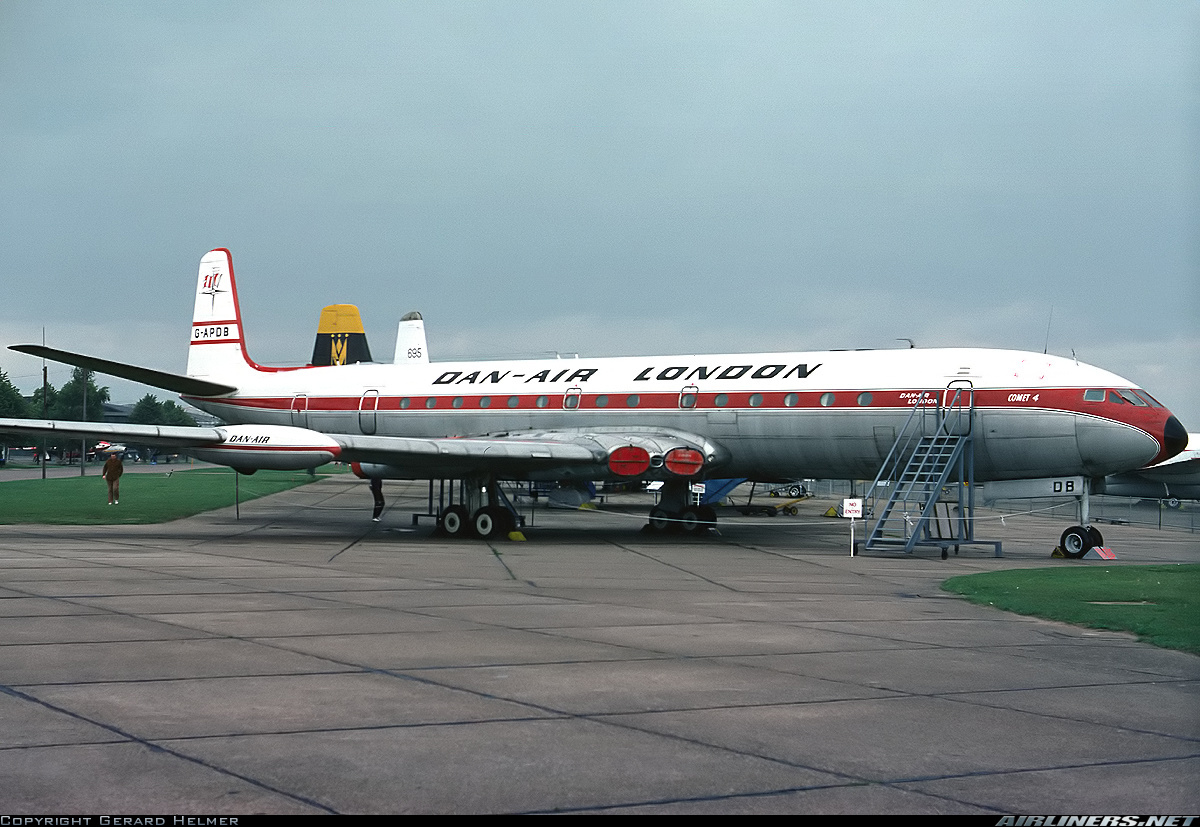
Bob Hood loves the Comet; the de Havilland Comet Mk4C, that is, currently at the MOF Restoration Center at Paine Field. He is about to celebrate his 15th anniversary with the Comet restoration team, which he now leads. In nearly 25 years he has amassed over 18,000 volunteer hours and adds another 26 hours working three days each week.


His passion pours forth as he explains the Comets many design innovations as the very first successful jet powered airliner. Structural issues with the first model tarnished its reputation in the industry but failed to alter his opinion.

“This plane was designed by inspired people. Restorers that recognize the creativity of the original builders love to work on this plane,” he says as he points out yet another Comet innovation.

Bob first volunteered on the Boeing 247D in 1986. He believes the 247D was as innovative in the 1930’s as the Comet was in the early 1950’s; one with propellers and the other with jets. One of the highlights of his MOF time was watching the restored 247D take flight.

Bobs’s interest in aircraft restoration developed late in life. In 1965, with a degree in electrical engineering, he joined the leading edge Fairchild Semiconductor Company. He managed their automotive products group exploring ways to integrate new electronic controls in the auto industry.

He did acquire a pilots license and owned a four place Navion “A” followed by an “A” Model Beech Bonanza.
His flying interest took a new course in 1986 when he toured the Restoration Center with a professional group. He was hooked. While he is the current Comet Project Manager he is quick to point out that literally hundreds of individuals have devoted time and energy to the project. In 2002 they did a tally and identified over 125 volunteers who had worked on the plane up to that time. He estimates that more than a hundred names could easily be added to the roster by now. And that doesn’t include the many supporters he has found in the United Kingdom who have helped with parts, advice and encouragement.

His leadership philosophy? Point out what needs to be done and then get out of the way.

The most frequent question he is asked? When will it be done?

The cockpit and first class sections are nearly complete. The aft cabin is coming along nicely. But much remains to be done and, he is quick to point out, new volunteers are always welcome.

When the work is done, the record will be clear that Bob Hood played a big role in its completion.

Air Force One and the Concord; A Docent Love Affair

The following article by Stephen Dennis appeared in the September/October 2010 edition of Aloft, a publication of Seattle's Museum of Flight.

Rick Wheeler loves airplanes. They are in his blood. His late father flew for Hawaiian Air, one brother currently flies for them and a second brother builds planes for Boeing.

A developmental disability keeps Rick from flying planes but nothing can keep him away from them. In five years at the MOF he has amassed over 500 volunteer hours. Most of that time has been spent in the Air Park where he devotes two days a week to cleaning either Air Force One or the Concord. Rich Lynch, Air Park Lead, reports that, “Rick is hard working, reliable and very fun to work with. On Air Force One days Rick wears his Air Force One hat and conducts a pre-cleaning walk around the plane in pre-flight fashion. On Concord days he always arrives in his British Air jacket.”

One day, when the Plexiglas was removed for cockpit cleaning, Rick posed in the Air Force One pilot’s seat in a cowboy hat doing his best LBJ imitation. He is particularly proud of that photo.

It’s a 90 minute bus ride from his home to the MOF so Rick makes the most of his time upon arrival. Following his Air Park work he is often found in the control tower or the Personal Courage Wing. His current favorite in the PC Wing is the P-51 and he is saving his money to fulfill a dream in 2011; a flight in the B-17, Liberty Bell.

His volunteer work around the biplane concession has earned him several rides over Seattle and he gives each of his nieces and nephews a biplane ride upon graduation from high school. He has even done a tandem jump from a plane in Hawaii.

His plane passion continues when he is away from the MOF. He maintains a museum quality collection of aircraft and airline pins which he once displayed in the hobby area of the Puyallup Fair. He collects tail numbers in little spiral notebooks and, according to Lynch, if you want to know anything about a particular plane, just give Rick the tail number.

Rick Wheeler, with the support of his “flying family,” demonstrates there are no limits to the volunteer opportunities at the MOF.

Thursday, September 23, 2010

Museum of Flight; Support for Aviation Education

This article appeared in the July/August issue of "Aloft" a publication of Seattle's Museum of Flight.

The Museum of Flight is dedicated to serving learners of all ages. To maintain an “educational edge” Museum leadership depends on the thoughtful and enthusiastic input of the Educational Leaders Advisory Board or ELAB. Made up of educators, government and industry representatives, ELAB volunteers devote countless hours to the Museums educational programs and have played a valuable role in keeping the programs fresh and focused.


Michael and Jessica van Son, brother and sister, bring two very different perspectives to the ELAB and illustrate the type of talent volunteering their energy to the board.

Combining a business degree with a love of science Michael works as a metrologist with Lockheed Martin in Silverdale, Washington. In addition to his ten years on the ELAB he volunteers hundreds of hours with Kitsap County school science initiatives.

According to Seth Margolis, Director of Education Programs for the Museum, “Michael represents the aerospace/engineering industry on ELAB. He brings that big picture view point to the board. He understands how our programs intersect with the industry side of the education and guides us to consider their role in the larger field---that student experiences at the Museum are not simply static but that they lead into further discovery and inspiration to explore the STEM fields as careers.”

Jessica, a Longview area special education teacher, brings her students on an annual visit to the MOF. Four years ago she was encouraged to join the ELAB to bring her energy, interest in scientific education and understanding of special needs students to the Museum.

“As a teacher, Jessica brings a formal education perspective to ELAB,” said Margolis. “She can view our programs from the end-user side of the equation. She understand how they relate to the school system and what we need to do to ensure that they meet the scholastic needs of the audience while also being enjoyable, rigorous, and age appropriate. She allows us to hear directly from our constituents. Jessica has also been a Washington Aerospace Scholars residency program counselor for two years and thus is intimately involved in all of our programs.”

The most visible Museum volunteers are the docents who are present in the Museum everyday, interacting with visitors. The ELAB volunteers perform their service “behind-the-scenes” to insure the educational component of the Museum vision stays relevant for the regions life-long learners of all ages. Jessica and Michael are excellent examples of the quality and passion of the ELAB members.

Wednesday, June 23, 2010

The B-17; A Labor of Love

This Volunteer Profile appeared in the May/June 2010 issue of "ALOFT," a publication of Seattle's Museum of Flight. It honors the many volunteers who have worked to restore a vintage B-17 for the Museum's collection.

Since its first flight the B-17 has been an icon on the Boeing and the Seattle area aviation scene. Even now, 75 years later, you don’t have to look far to find a Museum volunteer whose life has been touched by the big plane.

Velva Maye, for example, has been working on the restoration of the Museums B-17 since it was acquired in 1991. Why the interest?

“Because my parts are on that plane,” she replies.

In 1942, at age 18, Velva joined Boeing as a “standard parts buyer” for the B-17 program. She’s confident her nuts, bolts and rivets are holding the Museums plane together. The work was exciting for a young woman. When an “SOS,” shortage of supplies, was sent up from the shop floor Velva would, at times, end up shuttling parts from one part of the plant, where there was a surplus, to relieve the shortage. That was the start of a 40 year career with Boeing.

She and other “lady restorers,” like Jean Almeda and Linda Broyles, handled whatever assignments were sent their way; sanding, painting, record keeping, etc. Velva recalls another volunteer, Sarah McDonald, who seemed to get all the “crummy” jobs; treating metal parts in foul smelling solvents, for example. But she and the others stuck with the program.

Early in the restoration Velva had the good fortune to work with the late Roy Ostling, one of the original engineers for the B-17 program. Roy had worked on every model of the plane from the “B” through the “G” models.
“Roy knew that plane down to the smallest detail. He insured that all our work matched the original design in every respect,” said Velva.

Walter Bergstrom, a five year Docent, had a different view of the B-17; from the ball turret slung beneath the belly. Walter volunteers every Friday and enjoys telling of his wartime B-17 experiences. He particularly enjoys working with kids.

He joined his crew as a waist gunner but, since “they had trouble keeping guys in the ball turret,” he volunteered to switch. At 5’ 10” he was a bit tall for the turret but found it comfortable and the view was spectacular. As his bomb group formed up he would curl into the turret and stay there until they left the continent on the return flight; six to eight hour stays were not unusual. Once in the turret he was the pilot’s eyes below and behind the plane. With so many planes maneuvering in a small space his view was critical. It was so snug that he had to leave his parachute up in the plane.

Walter arrived in England in April, 1944, in time to give the British support during D Day. His squadron carried out attacks on Caen in advance of the British. Unfortunately for Walter, he had one more take off than landing. On his 24th mission their plane experienced a serious wing fire and struggled to make England. On final approach Walter and others in the rear decided to jump. The handle on the escape hatch caught on his cuff and stayed with him all the way down. Due to the low altitude his chute barely opened and he landed badly in a dry swampy area. Two local boys made him comfortable on the ground, stole two packs of Chesterfields, and left him for later rescue.

His early exit broke 16 bones, including his back and both legs, and started him on a yearlong rehab in the states. It also earned him a membership in the “Caterpillar Club,” sponsored by the Irving Air Chute Company and open to flyers who used their parachutes in an emergency. Walter is proud of his club membership and, despite his bail out, still swears by the B-17.

“Everyone wanted to fly the B-17. It was the best. Four years ago I got to go up again; this time in the “Aluminum Overcast” when she visited Seattle. But at 210 pounds I don’t fit in the ball turret any longer!”

Docent Ted Gary enjoyed a different view, as a tail gunner on 22 B-17 missions beginning in January of 1945. He was always looking back. Late in the war German aircraft were scarce but the flak never let up. Ted took little comfort from the fact that the canvas gunner enclosure of the “F” model had been replaced by thin aluminum on his “G.”. His kneeling position was cold and cramped and his parachute had to be kept “nearby” during the long flights.

Near the end of hostilities he flew two “chow hound” missions, dropping food from 400 feet over occupied Holland. He can still recall the sight of Dutch civilians running past silent German gun positions to recover the falling food. Since the bomb bay food release system was unreliable some of the pallets fell far from their intended targets.

“I was afraid we’d kill civilians with food canisters,” he said.

During a later vacation in Holland he was nearly smothered by a thankful Dutch woman when she learned that he’d participated in the food drop that saved many lives.

Hank Hendrickson both piloted a B-17 and, since 2004, has been active with the restoration of the Museums plane. Hank picked up a new B-17 in May of “44” in Georgia and by June was flying the first of his 30 European missions. His appreciation of the rugged plane was enhanced on a mission over Germany when flak ripped a massive hole aft of the bomb bay, killing three crew members and sending the plane into a roll. With all engines still firing he regained control and diverted to a secondary target not fully appreciating how badly damaged the plane was. After inspecting the damage they aimed for an emergency field on the English coast and, confident the stress of landing would break off the tail, he ordered the tail gunner to jump before executing a successful landing. The chilly tail gunner was recovered uninjured.

Hanks extensive combat time has made him an ideal tour guide for visitors to the Museums restored plane.

Not all of the Museums B-17 aficionados had wartime contact with the big plane. Herb Phelan, for example, didn’t make serious contact with the program until 1993, following a career in aircraft design at Boeing. Looking for a retirement activity he became hooked on the restoration project and, since 1999 has served as project manager or crew chief for the project. He recently took over the B-29 restoration as well; and all as a volunteer!

Organizing volunteers to do anything can be a challenging task but, from the results and comments of other volunteers, it is clear Herb was the right man for the job. Under his leadership the restoration volunteers strive for authenticity in their work which continues to this day. Using the original production drawings they have fabricated hundreds of parts and systems to bring the plane back to “factory” condition. When a lack of castings or tooling prevent perfect replicas they adapt to achieve the “look and function” of the original parts.

For example, with Herb’s direction, Alan Peover, another volunteer, recently installed a windshield wiper assembly for the bombardier position. Using original drawings new parts were fabricated and matched with authentic components purchased on-line to bring the installation up to factory specs.

In addition to fabrication skills Peover has found agility to be an asset as well. To install pulleys, cables and brackets for an “emergency cable release for the bomb bay doors” Peover had to remove floorboards and squeeze his body into nearly inaccessible compartments.

Peover is now fabricating ten simulated 500 pound bombs for installation in the planes empty bomb bay. Many hours will be spent fabricating fuses, fins and other components based on design drawings acquired from a source in Great Britain but, in the end, they will look like the real thing and further enhance the accuracy of the restoration.

The list of involved volunteers could go on and on; Loody Christofero and many other have invested countless hours in the B-17 program. The Museum is fortunate to have such skilled and dedicated volunteers. Future generations who want to see a truly authentic restoration will benefit from their commitment and hard work for decades to come.

Marquita Fortner; Aviation as a Family Tradition

This Volunteer Profile appeared in the March/April 2010 edition of "ALOFT," a publication of Seattle's Museum of Flight.

Marquita Fortner has been described as “an accomplished young woman.” That may be an understatement. In just two years as a Docent, working Saturdays and every special event she can squeeze in, she has amassed 262 hours of volunteer time. Why?

“It’s a great place to share my love of aviation, its history, people, planes and companies,” she replies.

Aviation is in her genes. Both parents are private pilots and Marquita flew a plane before she drove a car. She is a graduate of the New Mexico Military Institute, Embry-Riddle and has a Masters degree in transportation policy from George Mason University. She is employed by a consulting firm that supports the air cargo industry and will soon receive her commission in the U. S. Navy reserve. She is a busy 27 year old!

She enjoys all her Docent time at the museum and particularly enjoys speaking with young people about opportunities in the aviation field. Two museum encounters have been particularly memorable. Working the 2009 gala she met and was photographed with her “all time favorite” astronaut, Charles Duke, the lunar module pilot on Apollo 16. (Who landed on the moon a full decade before she was born!)

On another occasion, while giving a Tip-to-Tail presentation on the F-104, she met an “F-104” pilot and his daughter. The daughter returned later to thank Marquita, indicating her presentation had caused her dad to open up about his flying experiences like never before.

“It meant a lot to me to see how the presentation helped the daughter to learn more about her father. He’d ejected from two F-104’s and ended up marrying one of the crash investigating officers. He also served as an SR-71 test pilot. What a flying career!”

Though her Naval Reserve duties will take her from the museum some weekends she still plans to stay as involved as she can. Starting so young, there is a good chance she will set new records for volunteer hours. She is off to a good start.

Friday, October 16, 2009

Cycle Idaho; The Hiawatha and Coeur d'Alene Trails

Idaho offers wonderful bike trails, set in the mountains on old rail lines with only moderate grades. To read about two of the most popular, the Hiawatha and the Trail of the Coeur d'Alenes, visit Steve's Travel Journals.

But don't pack your bikes just yet. Snows have come to the high country closing the higher trails. Instead visit the site for inspiration and planning for 2010. Enjoy.

Friday, June 26, 2009

Old Seventy; Requiem for a B-17

This article, based on a relative's personal notes and official records, appeared in the June 2009 edition of "Warbirds Magazine."

Over 12,000 B-17 variants were produced during World War II. Only a few, like the Memphis Belle, have left deep tracks in the sands of history allowing historians to follow their movements during their often brief life in the Army Air Corps. Of the “B” series only one, serial number 38-215, has left a significant trail.

Through letters, personal journals, after action reports and government records 38-215, later nicknamed “Old Seventy,” can be followed from her November, 1939 delivery at March Field to her fatal Aleutian crash July 18, 1942. During her life she played a number of roles: test platform for cold weather operations, patrol plane under Navy control, bomber and weather reconnaissance aircraft.
The B-17B series was born in the middle of the depression when the Army had to beg for each development dollar from a reluctant Congress. A direct descendant of the model 299, launched in 1935 and the 13 YB-17s, ordered for testing in 1936, the “B” series included a number of design upgrades including superchargers, a larger tail, new nose, hydraulic brakes and revised gun and bombardier positions. It is arguably the first “production” version of the B-17 and the first assigned to active bombardment groups; one on the Atlantic coast and one on the Pacific side. Only 39 B-17Bs were built and none survived the war yet they made a valuable contributions to the further development of the “C,” “D” and ultimately the first model worthy of the “Fortress” moniker, the “E” series.
Old Seventy spent the first months of her career in California, between March Field and the Sacramento Air Depot. In early 1940 orders were issued for the transfer of Old Seventy and her sister ship, 38-216, to the new Army Cold Weather Test Detachment at Ladd Field (now Fort Wainright), then under construction near Fairbanks, Alaska. The detachment would be charged with testing aircraft, equipment, maintenance procedures and other Army gear in the frigid northland. While bush and commercial pilots had been developing skills for Arctic flight operations, the Army lacked cold weather experience.
Old Seventy, 38-216 and the Cold Weather Test Detachment (CWTD) would provide that knowledge.
On April 14, 1940 Major Dale Gaffney, Lt. Marvin Walseth and 16 others were detached to Ladd to pave the way for aircraft and technicians to follow. They arrived to find a field under construction so set up their first operations in nearby Fairbanks.
At March Field technicians went to work on the two Alaska bound B-17Bs to prepare them for their Arctic assignment. Guns and bomb racks were removed, replaced with test equipment. Day-glow orange was applied to the wing tips and tails of the silver birds and a new symbol, a bomb carrying polar bear, was applied to each fuselage. Old Seventy received a large “1” on the fuselage and smaller one on the tail. 38-216 received a similar “2.”
On October 4, 1940 the two planes departed March Field carrying six officers and eighteen men. Arriving at Ladd bundled in heavy parkas they were surprised by the moderate fall weather and the lack of snow. They would soon learn why Fairbanks was selected as the cold weather test site.
Anchorage based General Simon Buckner, newly assigned Commander of the Alaska Defense Forces, favored the big plane for his frequent aerial tours and soon the planes were making appearances at remote fields all over the territory. While single engine bush planes were common, the big bombers were a novelty in the north. They were so noteworthy that on several occasions in October and November the Anchorage newspaper reported on the arrivals and departures of the planes. In one case they noted it “stayed on the ground for 15 minutes.”
In addition to testing work Old Seventy made frequent trips to Alaska’s interior, inventorying available landing sites for use in flying emergencies and in time of war. At then end of November Lt. Walseth, Gaffney’s adjutant, flew to Fort Yukon and then out over the Arctic Ocean. On December 1st he was off to Nome to pick up fur parkas and mucklucks locals were making for the Army. In a letter home he reported…“believe me, it was a great treat for all the people over there and for all of us as the field was rolly and not a foot too long. We just got in and off.”
The winter testing had fallen into a routine when tragedy stuck the small Ladd flying community. In early February Captain R. S. Freeman flew 38-216 to the Sacramento Air Depot with reports concerning the winter flight operations at Ladd. On February 6th, enroute from Sacramento to Wright Field, the plane crashed into a Nevada mountain killing all aboard. Old Seventy was now the only four engine bomber operating in the Alaska Territory.
Later that month Lt. Walseth filed a report of the first year’s activities of the Ladd CWTD. He reported that Old Seventy had flown over 324 hours in just six months at temperatures ranging from -47 degrees to +50 degrees F. During that time a number of changes had been made to the aircraft including the installation of:
· 1000 watt engine oil immersion heaters.
· A B-17C style cabin heating system with boiler units on two engines. (First orders for the “C” series planes had been placed in July of 1940)
· Six outlets for heated flying suits.
· 100 amp, type E-85, generators replacing the 50 amp models.
· Defroster for bombardier’s aiming window.
He also reported on the testing of electric flying suits from General Electric and United States Rubber. Flight crews had found them wanting for Arctic use. One had caught fire. All had cold spots and failed to maintain temperature when the generators were not producing while idling on the ground. Worse “…if a man had to leave his ship…a man with good emergency equipment and good non-heated flying clothing would have a chance of surviving….A man in … electrically
heated outfits would be helpless….”
On April 30th Ladd nearly lost its remaining B-17B. As Walseth reported after a night flight, “Almost had to leave it [the plane] as the propeller governor broke and the engine ran away. Tore itself all to pieces, cylinder broke off, etc. In fact almost completely demolished. That is about the worst experience I have had.”
Grounded until a new engine could be shipped to Ladd her next trip didn’t occur until the end of May when Old Seventy flew at 15,000 feet non-stop to Sacramento making the 2400 mile flight in eleven hours. At Sacramento she received a complete overhaul and some features from the “C” series were added. The most visible change was the replacement of the “tear drop” gun blisters on the waist with flush mounted openings that produced less drag and gave better gun angles.
After nearly a month on the ground Walseth completed Old Seventy’s trip to the lower ’48 via San Antonio, Maxwell Field and Wright Field in Dayton. In July she returned to Ladd to enjoy the last months of peace on the northern frontier.
When war was thrust upon the United States, December 7th, 1941, Old Seventy was one of the few more modern aircraft available in the Alaska territory. But since the CWTD reported directly to Wright Field, General Buckner didn’t even include it in his aircraft count. On January 3, 1942 Buckner advised Army Headquarters that “There is not at the present time a single up-to-date fighting plane in the Alaska Defense Command.” The best he could muster were “seven obsolescent medium bombing planes [B-18s] and sixteen equally outmoded pursuit planes. [P-36s]”
As 1942 progressed the Anchorage based 36th Bombardment Squadron began cobbling together a fighting force. Old Seventy was transferred to the 36th. In March a single B-17E arrived from Wright Field followed in May by three LB-30s, an export version of the B-24. All but Old Seventy had rudimentary radar. This was the air fleet ordered to the NW Sea Frontier Command at the Kodiak Navy Base in late May. The same intelligence intercepts that set up the Midway battle included warnings of a Japanese attack on Alaska. The question was, where would it occur?
Old Seventy arrived at Kodiak with Lieutenants Jack Marks and Richard Ragle at the controls. The crew was given a top secret briefing and informed they were to be assigned to Navy Patrol Wing 4 and operate from to a new, secret base on Umnak Island in the Aleutian chain. But their mission had been so secret that they’d departed Ladd with a sick engine and without bombsight, bomb shackles, guns, ammunition and other essential fighting gear. Before she could go to war she had to be converted from a test platform to a fighting ship.
She returned to Ladd on May 26th and, with ground crews working 24 hours a day, finally arrived at Umnak on June 2, ready to join the fight.
For the next six weeks Old Seventy would be in almost constant motion. The day they arrived at Umnak they were fueled, armed and, at 1800, sent on patrol looking for the Japanese fleet. Aleutian weather, which haunted most flights, forced her to fly under the 400 foot cloud ceiling. Returning at 0530, the third, they learned of the Dutch Harbor attack, refueled and took off again.
With Marks and Ragle at the controls they ran into Japanese planes returning from Dutch Harbor and the waist gunner, Sgt. K. E. Nelson, claimed a kill. He also put 50 holes in the tail of Old Seventy! Flying beneath the 250 foot ceiling they followed the retreating enemy planes and came upon what they believed was the entire Japanese fleet. They dropped their bombs under heavy clouds and returned to base.
The next few days Old Seventy was in the air more than on the ground chasing phantom fleets over the unforgiving waters. At one point she nearly attacked an island rising from the foggy mists.
On June 4th she lost her bomb bay doors when her bombs released following a violent maneuver to avoid a cloud shrouded mountain side. Later they were forced to shut down number two engine when the cowling worked loose and nearly caught the propeller. While flying at reduced speed they were jumped by Japanese planes. Only the dense cloud cover allowed them to avert disaster.
By the 6th of June the constant flying was taking a toll on her. After an early morning patrol, departing at 0435, followed by a mid-day patrol, departing at 1150, she was serviced and in the air again at 1545. Shortly after takeoff one engine failed. She turned toward Anchorage on three engines with two generators out, severe icing and two superchargers acting erratically. More generator problems finally forced Old Seventy down at the small village of Naknek at 2320.
They made emergency repairs and returned to the fight only to be disabled on the 7th by a faulty fuel transfer pump, disabled during an earlier encounter with a Japanese fighter.
On the 9th she was assigned on a bombing run to Kiska, where the Japanese were establishing a base. Old Seventy’s problems began to mount. She was too old and slow to keep up with the B-24s that were arriving to expand the strike force. Only by pushing her to the limit could she keep up with the newer, faster, planes. She made the trip on the 9th but, on the 10th, number two engine failed and she had to abort. A ground check revealed that two cylinders lacked compression. She needed a new engine and the nearest spare was at Ladd.
She returned from Ladd sporting new Army green livery, replacing the international orange paint job from her testing days. Since she was not in the same league as the newer bombers she was given a new and important solo role, weather reconnaissance and redesignated YB-17B. Weather was a nightmare in the Aleutians; low ceiling, fog, high winds. Worse, storms came from the west so flights taking off from Umnak had no idea what they would encounter on their 600 mile flight to Kiska. Old Seventy’s new job was to serve as lead scout feeding weather information back to base operations.
Former Lieutenant Walseth, now Major, took over Old Seventy in July. The pace for both aircraft and crews remained grueling. In a letter to his family Walseth reported that, “Most of our flights run around ten hours. Sometimes two or three in succession but when possible every other day. After three successive flights it takes about a week to recover, which none of us get. So we are generally quite worn down. The war we are fighting up here is a long slow process as everything depends on the weather. All the fronts move toward us so the [Japanese] sort of have an edge on us as they know what’s coming and we don’t.”
And the grind continued. Out shown by the newer, faster models, Old Seventy continued to contribute to the fight in her own, independent way. Finally, on July 18 she failed to return from a solo photo reconnaissance mission. The old lady was gone.
The diary of Lt. Billy Wheeler, of the 36th Bombardment Squadron, describes what happened. “The weather at Umnak [on the 18th] was bad as usual. The visibility was as low as 100 feet and a sea fog surrounded the island during the greater part of the day. Several days after the report of the loss, Major Walseth’s ship was found on Cape Udak, the Southwest end of Umnak Island…[The crew was] buried near the Nikolski village, a short distance from the crash scene. These were the only burials in the squadron, bodies are rarely found in our job. It was assumed that Walseth had made a landfall on Umnak and had endeavored to follow the coastline to the field. An unexpected land projection caught him. He crashed only twenty feet from the top.”
Old Seventy’s contribution to the war effort ended 32 months after it began in the California sunshine. Piloted by a succession of young men she provided valuable lessons concerning the operation of aircraft in cold climates. The groundwork she and her crew laid made life easier for those who followed and helped insure the other 12,000 B-17 aircraft truly performed like “Flying Fortresses.”

Origin of the Name “Old Seventy”

The origin of the name “Old Seventy” remains a mystery.

Major Walseth, the pilot on its ill fated last mission, never refers to the name in his correspondence. He flew the plane extensively from its arrival in Alaska in October of 1940 until the Pearl Harbor attack. In early 1942, with many pilots and only one plane, other pilots were often at her controls. In May of 1942 Captain Marks flew her on her first combat missions with Lt Ragle as co-pilot. Both Marks and Ragle refer to her as Old Seventy as do authors who wrote extensively about the Aleutian campaign.
Ragle, who survived the war, suggested that the name may have come from a radio call sign given her by the Navy during her brief stint as a Navy patrol plane in late May and early June of 1942. Even he couldn’t recall specific details.
But the name stuck. And Old Seventy, the only “B” series bomber to see extensive combat action following Pearl Harbor, will live on in history with that moniker.
Where Are They Now?

Major, later General, Gaffney remained in Alaska and took over responsibility for the Ferry Command which managed the Lend Lease program that was ferrying planes to Fairbanks where they were turned over to our Russian allies.
Lieutenant, later Captain, Ragle returned to Ladd Field and played a major role in the Ferry Command under Gaffney.
Both Gaffney and Ragle survived the war.
Lieutenant Wheeler, who left behind an extensive diary of the 36th Bombardment Sq. activities, survived the Aleutian campaign and returned to Seattle with the remnants of the Squadron after it was disbanded following victory in the Aleutians. The author has no record of his other war time activities.
Major Marks and his crew perished in a B-17E shot down on a July 17 raid over Kiska.
Major Walseth and his crew perished on a remote corner of Umnak Island the next day.
General Buckner went on to lead the 10th Army on Okinawa where he was killed in action.

Thursday, April 2, 2009

Make Retirement Work; Your New Journey Requires a Two-way Street

Planning for retirement? This article explores the non-financial side of that planning. A previously published version was posted on this site in July of 2008. The Seattle PI newspaper saw the piece and requested an update for publication in their Life and Arts section on March 9th of 2009.

A copy of the article can be seen by clicking on Seattle PI.

I regret to report that the PI, as it was called in Seattle, ceased publishing a print edition a few days after this article appeared. The print version will be missed but the on-line version carries on.

Sunday, February 8, 2009

Developers Have a Song For Government These Days

This article appeared as a guest editorial in the "Puget Sound Business Journal" on January 30th, 2009. As a former home builder Steve couldn't resist taking a poke at a few Seattle area planners.

“How do you like me now?”

So goes the chorus of an old country song, a chorus area home builders could be singing at regional city and county council meetings if they were so inclined.

In good economic times home builders are a cash cow for local governments. Development, impact and permit fees are piled on with wild abandon and wheelbarrow loads of building material sales tax flows in to government coffers.

Ironically, at the same time homebuilders are routinely vilified as despoilers of the landscape; the chief cause of traffic congestion and crowed schools.

Well, now that the fee flow has disappeared, how do local governments like homebuilders now? When times are good home builders are a convenient source of cash. While this isn’t Chicago’s “pay to play” approach to doing business the results are similar. Home builders write big checks for the right to build homes that the region needs. The costs get passed on to consumers, housing prices rise, affordability becomes a dream and governments officials wring their hands about the high cost of housing.

But that reliable source of government revenue has dried up giving officials even more cause for hand wringing.Consider some of the “voluntary” contributions that have now diappeared, in light of the housing slump.
· Sales tax on building materials.
· Impact fees for schools, roads and parks.
· Utility connection fees.
· Building permits fees.

The sad truth is that many of these charges far exceeded the actual cost of providing services to the new home communities. So when the permit applications disappeared the county and city costs did not. Thus the squeeze on government budgets.

So, how do they like the homebuilders now?

With apparent disregard for the sad state of the housing market and in spite of the shortage of affordable housing, agencies have not slowed their efforts to further raise the cost housing, once someone decides to build one.
· One Snoqualmie Valley school district just doubled their impact fee per home to $10,000.
· Regional fire marshals are pushing a plan to require fire sprinklers in all new homes at over $10,000 per home.
· Many communities are enamored with Low Impact Development (LID) a green and more expensive approach to community development. While some elements have merit the economics are being swept under rug as communities vie for the right to say, “my community is greener than your community.”
· King County is toying with requiring a “Carbon Impact Analysis” for new development. Read another way it means more delay, more studies and more cost.

This list could go on. It appears that the planners, freed from the burden of processing permits, are now devoting their efforts to the hot planning idea de jour. And when the housing market returns, and it will return, it will be accompanied by the usual municipal hand wringing about the lack of affordable housing. An optimist might hope that governments would show more respect for an industry that does so much to fill their tax coffers in good times while providing the basic housing for their citizens.

In the meantime regional homebuilders can gain some satisfaction, while dusting their unsold homes, by humming Toby Keith’s, “How Do You Like Me Now?”

Sunday, January 18, 2009

A War of Words; The U S Army vs. the Alaska Game Commission

by Stephen Dennis, For the Fairbanks News-Miner
Published Sunday, January 18, 2009

The big war came to Alaska on December 7, 1941, Pearl Harbor Day. But a much smaller Alaska conflict actually began five months earlier. This little known war, over the issuance of hunting licenses, was fought with bombast, not bombs, and words, not bullets. It was a war between the U. S. Army and the Alaska Game Commission and, given the passion and rhetoric displayed, it is hard to believe they worked for the same government!

Like many wars, this one started innocently enough when Withers Tolbert of the 4th Infantry Division at Ladd Field (now Fort Wainwright) was denied a resident hunting license in July of 1941. At the time the fee for a resident license was one dollar per year compared to fifty dollars for a non-resident license. With starting pay in the Army a meager $21 per month, the denial of access to a resident license was tantamount to denying the young soldiers the right to hunt at all.

Despite Tolbert’s pleas for reconsideration the rock solid bureaucrats at the Alaska Game Commission, a Federal agency, would not budge. He was a soldier. He was different. To receive a resident license a civilian simply had to declare that Alaska was his home and that he had been in the Territory for one year. However, since all servicemen were from somewhere else, in Alaska by order of the Army, they were not eligible to claim residency regardless of how long they had been in the Territory.

The license skirmish might have ended there had it not caught the attention of Lt. Marvin Walseth, the Adjutant at Ladd Field. A Minnesota hunter himself, he viewed the Commission’s actions as an affront to the U. S. Army and the hundreds of servicemen that were pouring into the Territory in those days. He decided to launch a frontal assault. On July 23rd he applied for a resident license at the Fairbanks office of the Commission pointing out, in writing, that he had been in Alaska for over a year, he owned land and he planned to make Alaska his home. It seemed like an open shut case. It wasn’t.

He was refused a license and the war of words began. It is unclear who said what to whom during the following two weeks but on August 4th, in his role as Adjutant, Walseth advised the Commission’s Fairbanks office that Lt. Col Dale Gaffney, Ladd Field’s Commanding Officer, was banning all Commission personnel from Ladd. Existing gate passes were to be returned and, in the future, game agents could only visit Ladd Field with special permission and under escort. The action was taken “…Because personnel of the Alaska Game Commission have made erroneous statements that are not conducive of goodwill to the Military Forces…”

This action must have been awkward for Walseth since one of the Fairbanks game agents, Sam White, was personnel friend. White had dined with the Walseth’s on several occasions and sent them a book on Alaska as a wedding present. White and Walseth had also flown together on trips to the back country. But for now White and his associates were banned from the Field.

The word battle in Fairbanks must have made waves in the system because the Commission soon rolled out their big gun from Juneau in the form of Frank Dufresne, the head of the Commission. Dufresne turned out to be their secret weapon. He was a bureaucrat among bureaucrats. Never giving an inch of ground he could write the kindest letters expression sympathy over the plight of the soldiers who wanted to hunt and then, in the end, blame Congress who made the rules. His job was simply to enforce them. He claimed he wanted to help but his hands were tied.

As to Walseth’s apparently foolproof application, it was reviewed by Dufresne and denied again on August 20th. Dufresne claimed that living at Ladd Field was different from living in Alaska for residency purposes and referred Walseth to a copy of the Alaska Game Law, which was written by Congress in far off Washington D. C.

Both sides now resorted to a war of attrition, hoping to wear the other side down. Letters and radiograms were tossed back and forth, between Juneau and Fairbanks, like live grenades. Dufresne would explain why no variance from the rules was ever permitted. Then Walseth would provide him with examples of exceptions that had been made by Dufresne’s agents. For example, Walseth named three members of the Signal Corp who had been granted resident licenses though no more qualified than Walseth and Tolbert. Why, he asked, were these touted rules not being applied uniformly? Further, why could any civilian just walk into a Commission office, claim his was a resident and walk out with a license with few questions asked? Were there different rules for civilians, Signal Corp personnel and the rest of the Army?

Dufresne was a master of doublespeak and, for each rule exception Walseth cited, he had an explanation for the apparent inconsistencies. Reading the correspondence today one can understand Walseth’s frustration. Dufresne’s rationalizations were weak and inconsistent but he would not budge from his prepared position. In this war of words it was clear that the Commission was well supplied. With hunting season approaching, Walseth needed to try a new approach, his wife.

Walseth knew that a number of Signal Corp spouses had received resident licenses. The Commission claim that Army personnel were different from others in Alaska would not stand up with her. She was clearly a civilian. So Phyllis Walseth applied for her first hunting license. A day later her application was denied and her dollar returned. It was time for another radiogram.
On August 30th Walseth launched a searing radiogram missile at Dufresne citing several Signal Corp wives, similar to his own, who had received resident licenses. Walseth felt this license denial and the Commission’s regular shoddy treatment of Army personnel was reprehensible. He closed the message with “…It may appear that I seem provoked concerning this. If so, that is quite right. For your information court proceedings have been started and though it may take some time, it is now up to the court to make final settlement.”

Since the Fairbanks office of the Game Commission had escalated the fight by pushing the matter to their Juneau headquarters, in the form of Frank Dufresne, it was time for the U. S. Army to do the same. Walseth turned to the head of the Alaska Defense Forces, General Simon Bolivar Buckner, Jr.

Under normal circumstances a lowly First Lieutenant in Fairbanks would not be on speaking terms with a General Officer in Anchorage. But during the 1940 defense build-up in Alaska nothing was quite normal. Walseth had met with Buckner on many occasions when the General visited Ladd Field and had served as his pilot on several trips to the interior. During one of the General’s visits to Ladd the lieutenant surprised his young wife by bringing Buckner home for dinner.

Walseth and Gaffney, the Ladd Field commander, contacted the General and received an enthusiastic response. Buckner commanded a growing corps of low paid troops who would be living in a high cost Territory. Hunting would be an activity they could afford which would boost morale and keep them out of trouble. Additionally he no doubt saw the inherent inequity in the contradictory treatment of civilians, Signal Corp and Army personnel.

On September 19th Buckner made application for a resident license before Game Commission representative, Jack O’Connor. He attested to the fact that he had resided in Alaska for one year, that he was domiciled there, voted there and intended to stay there. O’Connor refused to issue the license.

Buckner then turned to Federal District Court in Anchorage. O’Connor and the Game Commission were named in a suit. The general sought an order from the court directing O’Connor to issue the license. At that point a game of cat and mouse ensued. When Buckner’s attorney sought to serve O’Connor with the suit he was nowhere to be found. Where he disappeared to was a mystery likely encouraged by Dufresne at headquarters.

At first the Commission simply ignored the proceedings as if Federal Courts didn’t matter to them. Upon hearing the case the judge concluded the license should be issued and called for a second hearing. Concerned over the direction the case was going the Commission finally came forward to denounce the entire proceeding and claim the court did not have jurisdiction over the matter in the first place.

On October 2nd the court reconvened and ruled on all the matters. First, it did have jurisdiction. That dealt with the Commission’s argument. Second, should Buckner receive a license? The answer was a resounding yes. The court found that if an applicant met the requirements of the law, including the residency test, the Commission staff had no right to use discretion to treat some applicants differently from others. That was the very point that Walseth had been arguing for weeks. It appeared that a clear cut victory for the Army was at hand. It was not to be so.

O’Connor refused to appear in his office so Buckner could apply for a license. A U. S. Marshal was dispatched to find him and bring him in. When the errant O’Connor was brought in Buckner presented him with a completed license application and the one dollar fee. O’Connor again refused to issue the license. He then left the office. Court was reconvened and the judge issued an order finding the game commission employee in contempt of court. Once again the Marshal was called, this time to arrest O’Connor. An hour later everyone but O’Connor was back in court. The empty handed marshal explained that his quarry had escaped by going to Fort Richardson where the marshal had no jurisdiction to make an arrest. Essentially a government employee had escaped apprehension by another government employee by escaping to a government reservation!

Undeterred the judge ordered the clerk of the court to issue the hunting license to Buckner in O’Connor’s name. O’Connor would be dealt with at a later time.

Any celebration of victory by Army personnel was short lived. Dufresne would have nothing to do with the judges ruling. His position was made clear in a front page article in the October 7th, 1941 Fairbanks Daily News-Miner. First, the Commission had no objection to Buckner’s license; they just did not recognize it as valid and planned to appeal the ruling. Second, the ruling only applied to Buckner, not to any other Army personnel. The Commission would not issue licenses to other soldiers. Finally, showing what a kind hearted bureaucrat he was, Dufresne said he would continue his efforts to change the law. In the meantime Buckner could hunt alone.
As the article further pointed out,…”[we know how Dufresne] feels about $1 game-shooting privileges for members of the agency assigned by the government to protect the Territory’s soil and human population…”

An editorial in the November 1941 Alaska Sportsman expressed sympathy for the soldier’s plight. “It is manifestly unfair, however, to deny a soldier who gives his time to the service of his country, the rights, such as that of hunting, which other citizens enjoy, when he has complied with the same requirements as the civilian.”

So who won the battle for the license? In the short run you would have to say that the bureaucrats beat the Army. In the sometimes virulent war of words the veteran Dufresne had a clear advantage over young Lt. Walseth. Sitting behind his volumes of regulations with years of double talk experience he was a formidable opponent.

More important matters would soon consume the military in the Territory and passion for the hunting license dispute would wane. Just two months after the judge issued his ruling Alaska changed forever with the bombing of Pearl Harbor.

The participants in the license battle moved on. General Buckner went on to distinguish himself in the defense of Alaska but later lost his life in the 1945 battle for Okinawa. In July of 1942 Lieutenant, then Major, Walseth lost his life when his B-17 crashed in the Aleutians returning from a flight over Japanese held Kiska. Gaffney stayed in Alaska and played a significant role in the management of the Northwest Staging Route which transited warplanes from the lower 48 through Ladd Field for delivery to our Russian allies. Bureaucratic history has consumed the stories of the Game Commission participants.

In the many years that have passed the military has continued to play a significant role in Alaska. Today members of the armed forces are afforded the same hunting privileges as civilians, Walseth’s goal in the first place. State officials are clearly kinder to the military than the 1941 Federal employees of the Game Commission. So, in the end, perhaps the efforts of those license warriors in 1941 were not in vain.

Sunday, December 14, 2008

Aerial Hunting of Wolves is Nothing New in Alaska

Aerial hunting of wolves is nothing new in Alaska
By Stephen Dennis, For the Fairbanks News-Miner
Published Sunday, December 14, 2008

FAIRBANKS — "I have been wondering whether wolves can be killed in mentionable numbers by ground strafing with regular Army equipment and, if this can be done, whether you will consider having some of your fliers attempt it when conditions are right.”

Crazy idea? Not when J. Sidney Rood, the General Reindeer Supervisor for Alaska suggested it in January 1941 to Major Dale Gaffney, the Commanding Officer of Ladd Field (now Fort Wainwright) in Fairbanks. In his Department of the Interior post in Nome, Rood was frustrated by the dramatic decline in the Alaska reindeer population during the 1930’s and placed much of the blame for that decline on marauding wolf packs. The wolves “have killed at least 200,000 reindeer since 1934,” Rood advised Gaffney. Something had to be done and aerial strafing seemed to be an innovative approach.

According to Department of Interior reports, wolves had been reported on the reindeer ranges since reindeer were introduced to Alaska in 1892. Single wolves or a single family occasionally would be spotted but the threat was not viewed as serious.

But Alaska reindeer populations began serious decline during the 1930’s. Alarm spread slowly at first. Government reindeer managers either didn’t notice the decline or assumed it was only a temporary situation. In May of 1933 the superintendent for the Northwestern District of the Reindeer Service wired his boss indicating that the Barrow area was facing a serious invasion by wolves. He noted that over 100 “deer” had been killed. In 1934 the Kuskokwim Unit Manager requested permission to use poison to stem the growing wolf threat. Shaktoolik, Point Hope and Newhalen stations all reported heavy losses to wolves during 1934.

By 1935 reindeer stations across Alaska were sounding the alarm. Plans were proposed to bring in professional hunters and trappers to stem the wolf tide and to educate the native population on herd management. But depression era belt tightening limited the resources available to fund extensive work.

While there may have been other factors at work in the decline of the reindeer population, attention focused on the wolf. Reindeer populations were declining and, so it seemed, the wolf populations were increasing. Logic suggested a connection between the two. The wolves had to go.

The reindeer decline wasn’t imagined. It was real. In 1969, Dean Olson, writing on the history of Alaska reindeer for the University of Alaska, Fairbanks noted that the reindeer population in Alaska declined from about 640,000 in 1932 to only 250,000 in 1940. Superintendent Rood had reason for concern.

Reindeer were important to Alaska in 1941. By Rood’s estimate, over 10,000 people, mostly natives, depended on reindeer for all or part of their food. In addition, cold weather clothing from reindeer hides was important to both the native population and to the US Army. The Army, in anticipation of a growing presence in the north, was contracting with natives for the manufacture of cold weather clothing for their troops. Rood estimated that over 34,000 reindeer hides would be required annually for clothing purposes.

“The Army has preferred reindeer parkas, because reindeer fawn skins are the warmest of light skins,” according to Rood.

If wolves were indeed the problem, why resort to air power to control them? Because, Rood reported, nothing else seemed to work. Poison was not an option. It posed risks for fox and other animals, valued by the natives. In any case, it was prohibited by the Territorial Law.

Trapping had been tried with little success. First, the natives didn’t have experience trapping wolves. Second, it was a difficult proposition in the best of circumstances. The “Newhouse No. 114 traps” were heavy and unsuited to sled travel prompting complaints by the natives. The wolves did not tend to follow trails in the wide open country so trap placement was problematical and drifting snow buried the traps. There were no trees to tie the traps to and the natives apparently lacked the patience to melt snow in sub zero conditions to anchor the traps.
While the Territory was offering a $20 wolf bounty few trappers were taking advantage of the program.

Hunting was a challenge any time. With the herd covering a range almost as large as the state of California, tracking was difficult. Roads were scarce for summer travel and winter hunting was limited by the absence of daylight and the wide open spaces.

Additionally Rood didn’t think “the guns of the Natives (in the .30-.30 lever action, open-sight class) [were] of the best type and condition for open-country wolf shooting.”

Hunting from the air, however, could overcome many of the problems. Large distances could be covered rapidly and different weapons could be used. Fighter planes, or pursuit planes as they were called in 1941, could tilt the balance against the wolves.

To prove the feasibility of aerial hunting Rood told Gaffney about his own wolf hunting experience during the spring of 1940. Flying from Kotzebue to Selawik at 1500 feet in a Stinson they spotted two wolves, contrasted clearly against the snowy backdrop. They proceeded to Selawik and switched to a Curtis Robin, feeling the slower “Robin” presented a superior shooting platform. They retraced their flight pattern and relocated the wolves. According to Rood, they descended from 1500 feet and slowed to about 75 miles per hour. Closing on the wolves they killed them with buckshot from a 12 gauge shotgun.
“Of course, I imagine it is one thing to hunt wolves from a fairly slow ship, using buckshot, but quite a different thing to use a hot pursuit ship employing machine guns, and success with the latter equipment may not be possible,” Rood advised Gaffney.

Rood had done his homework. He believed he had demonstrated that the wolves were an issue. He had shown how they could be tracked and killed from the air. Using the Army Air Corps “hot pursuit ships” as wolf hunters seemed like a good idea. The army needed practice with ground targets and the wolves needed to be controlled.

How did the Army respond? Rood’s letter made it to the desk of the Post Adjutant, Lt Walseth. There is no record of a response.

We do know the Army Air Corp in Fairbanks at the time was ill equipped to fight anything. Set up as a cold weather test facility their fleet consisted of two early model B-17 bombers, used as test platforms, several observation aircraft and a few Curtis P-37 pursuit or fighter planes.

The P-37 was a stretched out version of an older Curtis model, the P-36. To fit a new more powerful engine, the old P-36 design was stretched and the cockpit was pushed back. From the new cockpit position the pilots had a difficult time seeing well enough to land and take off, let alone hunt wolves. The planes were more of a risk to the pilots than the wolves. Only 13 of the planes were accepted by the Army before the aircraft order was cancelled. Most of the poorly designed planes made it to Alaska.

If the Army took a few shots at the wolves, they didn’t report it. It is more likely that, by the time the request made its way through “channels” Pearl Harbor had been attacked and Alaska was at war.

How about the Alaska wolf problem? Over 60 years later the debate continues. Game populations rise and fall and the wolf often gets the blame. The Alaska fish and game board continues to strive for a balance between predator and prey and the advocacy groups supporting each.

As for shooting wolves from the air; the debate continues. But don’t expect the Army or the Air Force to be called in anytime soon.

Stephen Dennis, a Seattle-based writer, has made extensive use of
personal and official records, left by the Maj. Marvin Walseth, to develop profiles and explore stories of the early flying days at Ladd Field (now Ft Wainwright.) Examples of his work are available at freelancesteve.blogspot.com.
Click Here to Link to the orginal article in the News-Miner.